
Description
Why You’ll Love It
Formulated without Xylitol, this gentle spray helps protect against caries and mouth dryness.
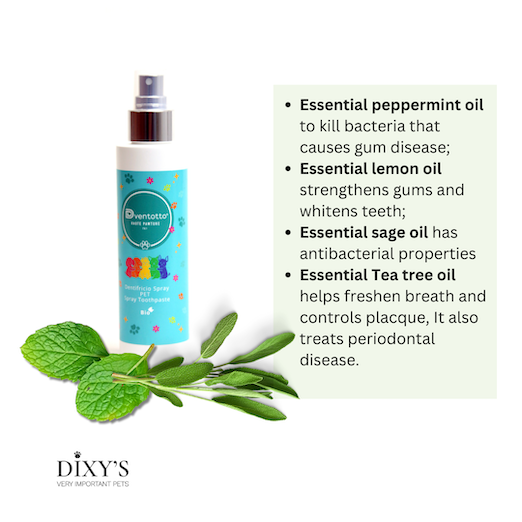
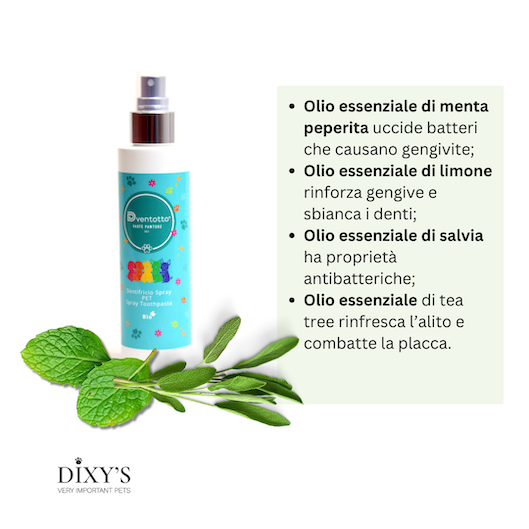
In addition, it is enriched with essential oils of peppermint, sage, lemon, and tea tree, known for their antibacterial, purifying, and refreshing properties.
As a result, your dog’s mouth stays clean, balanced, and fresh for hours.
⚠️ Note: No toothpaste — including this one — can remove existing tartar.
Only a professional veterinary cleaning can do that.
However, regular use of this spray helps reduce plaque build-up, supports gum health, and maintains a cleaner mouth between check-ups.
How to Use
Simply spray directly inside the mouth on gums and teeth — no rinsing required.
Alternatively, you can spray it on a pet toothbrush and gently massage your dog’s teeth and gums.
For best results, use daily or after meals as part of your regular oral care routine.
🌿 Formula & Benefits
This spray is designed for both convenience and care.
-
-
No toothbrush or water needed
-
No waste, no mess
-
No Xylitol, no bicarbonate of soda
-
Helps prevent plaque formation
-
Leaves teeth clean and white
-
Keeps breath fresh and mouth healthy
-
Ideal for daily use and routine maintenance
-
- Not suitable for cats
Natural & Ethical Care
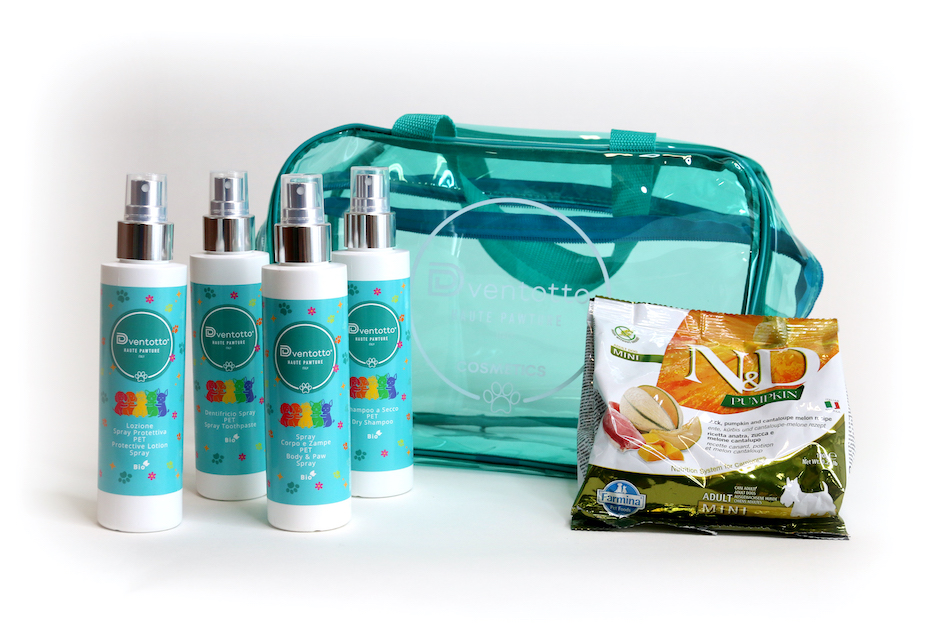
The Dventotto® Pet Care Line was developed after months of research and laboratory testing to meet the highest standards of safety and effectiveness.
All products are:
-
100% cruelty-free
-
Made with natural, pH-neutral ingredients
-
Formulated to respect the skin, fur, and mucous membranes of dogs
Furthermore, every Dventotto® formula is the result of careful craftsmanship combined with modern innovation, ensuring quality that truly stands out.
Product Details
-
Size: 150 ml
-
Made in Italy
-
Brand: Dventotto® Pet Care Collection
Key Ingredients & Properties
Peppermint Essential Oil – Refreshes breath, helps reduce bacteria, and adds a cooling sensation for lasting freshness.
Sage Essential Oil – Known for its purifying and soothing action; supports gum health and naturally combats oral bacteria.
Lemon Essential Oil – Provides natural antiseptic properties and a bright, clean scent that neutralizes bad breath.
Tea Tree Essential Oil – Acts as a natural antibacterial and antifungal agent, promoting oral hygiene and overall freshness.
Aqua & Natural Plant Extracts – Offer a gentle, pH-balanced base that respects your dog’s delicate mouth.
📩 For the full INCI list, please contact us at info@dixystore.com.
How to Teach Your Dog to Accept Spray Toothpaste (and Brushing)
What You Need
-
Dventotto® spray toothpaste (xylitol-free)
-
Soft finger brush or small dog toothbrush
-
High-value tiny treats (or lickable reward like dog-safe paste)
-
Towel + calm spot
💡 Daily rule: Keep sessions short (30–90 seconds), stop on a win, and reward generously.
Phase 1 — Build Positive Association (Days 1–2)
Show the bottle
First, let your dog sniff the closed bottle, then immediately give a treat.
Repeat 3–5 times so the bottle starts to predict something good.
Sound & distance
Next, spray once away from the dog (into the sink or air), and then treat again.
Gradually bring the sound closer over several repetitions.
As soon as your dog remains relaxed when hearing the spray, move on to the next step.
🟢 Goal: The sound of the spray = calm, positive expectation.
Phase 2 — Love the Taste (Days 2–3)
Taste on finger
Now, spray a small amount onto your finger and offer it for a lick.
If your dog hesitates, first smear a bit on a treat.
Keep quantities tiny; at this stage, you’re creating curiosity, not cleaning teeth.
Taste on lip
After that, gently touch a small dot of paste to the outer lip and let your dog lick it off.
Immediately follow with praise or a treat.
As a result, your dog will start approaching the product eagerly.
🟢 Goal: The taste itself becomes a positive experience.
Phase 3 — Mouth-Handling Comfort (Days 3–4)
Chin rest
Next, teach a simple “chin” — your dog rests their chin on your hand or thigh.
Reward 1–2-second holds.
This position becomes your calm “grooming signal.”
Lift lip = cookie
Then, briefly lift one lip for a second → treat.
Repeat both sides, slowly extending to 2–3 seconds.
Over time, your dog will allow lip lifts calmly and willingly.
🟢 Goal: Calm acceptance of mouth handling before any brushing.
Phase 4 — Introduce the Spray in the Mouth (Days 4–5)
Micro-spritz, front teeth
Once your dog is relaxed, do a quick, tiny spritz toward the front teeth (not deep).
Immediately reward with a treat.
Keep the spray angle low to avoid startling.
If your dog is still sensitive to the puff, spray onto your finger first, then wipe on the teeth.
Micro-spritz, sides
Next, slide the nozzle just inside one lip, do a small spritz, then treat.
Repeat on the other side.
Continue until your dog remains relaxed for 2–3 micro-spritzes per session.
🟢 Goal: Your dog calmly accepts the spray sensation inside the mouth.
Phase 5 — Pair with a Brush (Days 5–7)
Brush = treat
First, let your dog sniff the brush → treat.
Then, touch the brush to the lip → treat again.
After that, briefly touch the outer teeth → treat once more.
Smear + 3 gentle strokes
Spray the paste onto the brush or your finger.
Gently smear it over the outer teeth and gums.
Do three soft strokes on one side, treat, and repeat on the other.
Gradually, you’ll reach 3–5 strokes per side without fuss.
Build the routine
Over several sessions, increase to 5–10 gentle strokes per quadrant (outer surfaces only).
Always keep sessions under 2 minutes to end on success.
Maintenance (Ongoing)
Frequency
Ideally, brush daily, or at least 4–5 times per week.
If brushing is skipped, a quick spritz-only session still helps prevent plaque.
Placement priorities
Focus mainly on the outer back molars and premolars — they collect the most plaque.
Front teeth are a bonus once your dog is comfortable.
Troubleshooting
Startle at spray sound:
Begin by pre-spraying into the sink, then apply the toothpaste on your finger.
Re-train the sound at a distance with treats until relaxed.
Mouth-handling resistance:
Simply spend a few extra days on Phase 3 (lip lifts + chin rest).
Taking micro-steps always leads to faster long-term success.
Gag or excessive licking:
Use smaller amounts and aim only for the outer teeth, not toward the throat.
Heavy tartar or bleeding:
Minor pinkness is common at first.
However, persistent bleeding, foul odor, pain, drooling, or one-sided chewing require a veterinary check-up.
✅ Do / Don’t
Do
-
Keep every session short, fun, and rewarding.
-
End on success, then celebrate with a treat or play.
-
Replace brushes or finger brushes regularly and rinse after use.
Don’t
-
Don’t force your dog’s mouth open or hold the muzzle shut.
-
Don’t spray toward the throat.
-
Don’t use human toothpaste — it may contain fluoride or xylitol, which are toxic to dogs.
✅ Pro Tip:
Consistency is everything — gentle, regular practice builds trust and transforms dental care from a struggle into a bonding ritual your dog will love.